
How AI Gave Me the Confidence of a Man
I have a PhD in Computer Science from UCL. I've published papers on privacy-preserving machine learning. I build systems that protect sensitive medical data.
And for years, I was convinced I was missing some fundamental knowledge that everyone else had.
The Secret Handshake I Didn't Know
I didn't do a Computer Science undergrad. I studied Mathematics.
This shouldn't matter. But it felt like everyone else knew a secret handshake I'd never learned.
My colleagues would throw around acronyms. SOLID. DRY. Design patterns I'd never formally learned. They'd reference CS fundamentals like old friends: "Oh, that's just a classic producer-consumer problem." I'd nod along, then quietly Google it later. They'd swap LeetCode war stories from interview prep—problems they'd grinded through in university or before job hunts. I never did that. I didn't even know it was a thing until I was already working.
I knew my stuff. I could build the systems, solve the problems, ship the code. But I always felt like I was doing it wrong somehow. Like there was a "proper" way that everyone else learned in their second-year algorithms class, and I was just hacking my way through with mathematical intuition and Stack Overflow.
Here's the thing people don't tell you about imposter syndrome: it's not about whether anyone believes in you. My managers praised my work. My colleagues respected my contributions. My PhD supervisor told me I was a good researcher.
I chose not to believe any of them.
Every compliment got filtered through a lens of suspicion. "They're just being nice." "They don't want to discourage me." "They haven't figured out yet that I don't know what I'm doing." I had built an airtight defense system against evidence of my own competence.
The problem was never external validation. It was my refusal to accept it.
The research on this is well-documented. There's a popular claim that women only apply for jobs when they meet 100% of the qualifications, while men apply at 60%. The exact statistic is probably apocryphal since it's traced back to a speculative comment at Hewlett Packard rather than rigorous data. But the underlying pattern is real: LinkedIn data shows women are more selective when applying, particularly for senior roles. Harvard Business School research confirms that women are more likely to shy away from opportunities when they're concerned they aren't qualified enough.
I wasn't even thinking about job applications. I was worried about speaking up in code reviews.
The Rubber Duck That Knew Everything
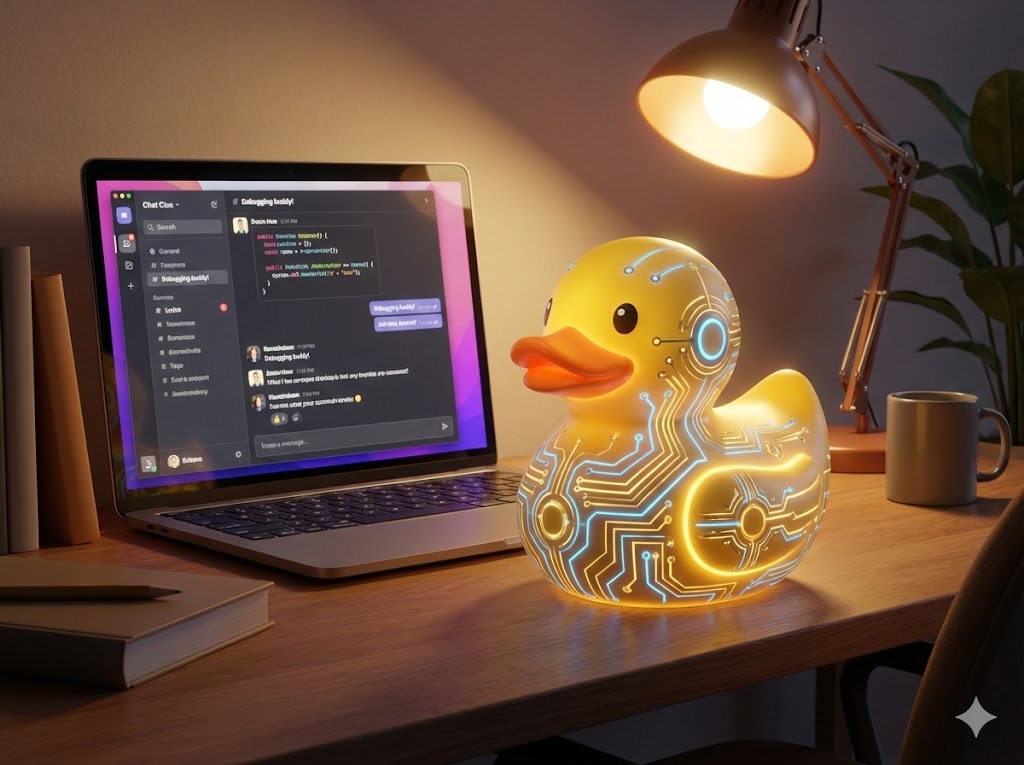
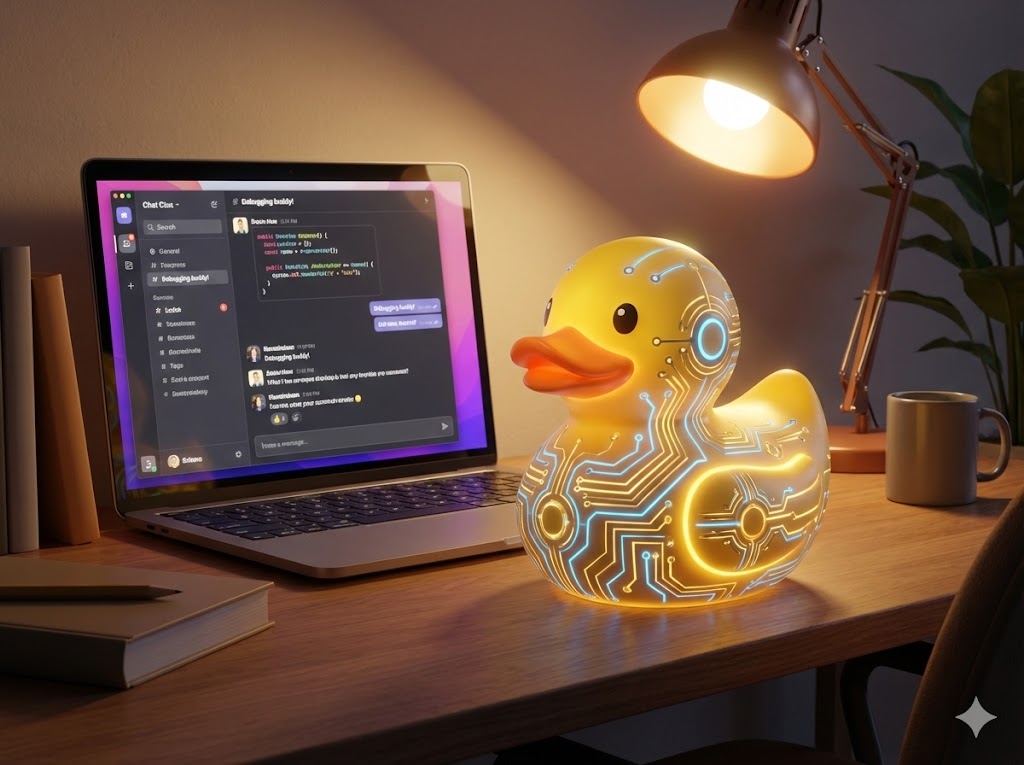
I started using AI as a coding assistant about a year ago. At first, it was just convenience—autocomplete on steroids.
Then I started asking it questions.
Not complex architectural questions. Dumb questions. The questions I was too embarrassed to ask colleagues.
"What does SOLID actually stand for and why do people care?"
"Is this the 'right' way to structure this, or am I doing something weird?"
"I'm about to suggest X in this meeting. Is that a reasonable approach or am I missing something obvious?"
The AI didn't judge. It didn't give me a look. It just answered. And more often than not, the answer was: "Yes, that's a standard approach" or "That's called [pattern name], and here's why it works."
It turned out the secret knowledge wasn't that secret. I'd been doing things the "right" way all along—I just didn't know the names for them.
Filling Gaps That Weren't Really Gaps
The thing about imposter syndrome is that it's not about actual gaps in knowledge. It's about perceived gaps. The fear that everyone else has a foundation you're missing.
AI let me test that fear without anyone watching.
"Is it normal to not remember how to implement a binary search from scratch?"
Yes. Most engineers look it up.
"Should I know what a monad is?"
Only if you're writing Haskell. Otherwise, don't worry about it.
"Am I the only one who finds this codebase confusing?"
No. This codebase IS confusing. Here's why.
Each answer chipped away at the mythology. The "real" engineers I'd been comparing myself to? They also Googled things. They also forgot syntax. They also found complex systems confusing.
The difference wasn't knowledge. It was confidence.
"But That's How I Feel All the Time"
A few months into working with AI daily, I was talking to my husband.
"I feel different," I said. "I'm not scared to speak up anymore. I feel like I could build anything."
He looked at me, genuinely confused.
"But... that's how I feel all the time."
Reader, I married a man who did a Computer Science degree. Who never published a paper. Who has less experience than me. And he walks around feeling like he can build anything, always has, and was baffled that I ever felt otherwise.
That's the confidence gap in one conversation.
What Actually Changed
AI didn't teach me anything I couldn't have learned elsewhere. The information was always available—in books, in documentation, in colleagues' heads.
What AI changed was the cost of accessing it.
Before: Every question was a confession of ignorance. Every Google search felt like evidence of my inadequacy. Asking a colleague meant admitting I didn't know.
After: Questions cost nothing. I could fill perceived gaps instantly, privately, without judgment. I could validate my instincts before meetings instead of doubting them during.
The gaps weren't real. But the fear of exposing them was. AI made the fear irrelevant.
The Irony
I have a PhD. I've published in peer-reviewed journals. I've given talks at security conferences. I work on systems that require genuine expertise in cryptography, privacy, and distributed systems.
And I needed an AI to convince me I wasn't faking it.
That's absurd. It's also true.
The research calls it "stereotype threat"—when you're aware of negative stereotypes about your group, you're more likely to underperform or hold back. Women in technical fields. Non-traditional backgrounds in CS. The awareness itself becomes a weight.
AI didn't remove the stereotypes. It just gave me a private space to build confidence without them.
What I'd Tell Younger Me
If you're a woman in tech, or anyone with imposter syndrome, here's what I've learned:
The secret knowledge doesn't exist. The people who seem confident aren't drawing from a deeper well of fundamentals. They're just not questioning themselves as much.
Your instincts are probably right. If you've been shipping code and solving problems, you know more than you think. You just don't trust it yet.
The cost of asking matters. If asking questions feels expensive—socially, emotionally, professionally—you'll ask fewer questions. If you can reduce that cost, you'll fill gaps faster and build confidence sooner.
AI is a judgment-free zone. Use it. Ask the dumb questions. Validate your instincts. Get the 2am reassurance that your approach is reasonable.
The Confidence of a Man
I used to think confidence was about knowledge. Know enough, and you'll feel confident.
It's not. Confidence is about permission. Permission to not know everything. Permission to figure it out as you go. Permission to trust your judgment even when you can't name the design pattern you're using.
Some people are handed that permission early. Others have to find it.
AI didn't give me knowledge I was missing. It gave me permission I didn't know I needed.
Now I speak up in architecture reviews. I propose approaches without disclaimers. I trust that my mathematical intuition is just as valid as someone else's CS degree.
I feel like I can build anything.
Apparently, that's how men feel all the time.
If this resonates, I'd love to hear your story. What gave you permission to trust yourself?